
 I feel the most pride when I’m wandering through the Knez Mihailova promenade in Serbia’s capital of Belgrade. And without fail, a particular chorus from famous folk singer Ceca always replays in my head: “My Belgrade put your arms around me.”
It is not my birthplace but it is one of the oldest and most prominent sites of my people and our Serbian history.
I don’t know all of the intricate details of our culture. I know that the Serbian people have been ruled over by several empires and invaded by many nations, and that its’ most recent wars still have a hold on those that stayed behind and those that have dispersed across the globe as refugees and immigrants.
But when I walk down Knez Mihailova, I think not about the wars, but of the traditions that survived and that are so boldly displayed on that pedestrian walkway. Although short in distance – measuring at one kilometer – Knez Mihailova has long upheld the country’s vital history.
Named after Prince Mihailo Obrenovic III, Knez Mihailova underwent several reconstructions before it became a pedestrian walkway and shopping hub. The promenade has preserved vital landmarks that date back to the 1870’s including the City of Belgrade Library, the National Museum, the National Theatre, and cafes Grcka Kraljica (Greek Queen) and Ruski Car (Russian Emperor). A statue of Prince Mihailo – erected in 1882 – still stands in the Republic Square, the main entry zone leading to the walkway.
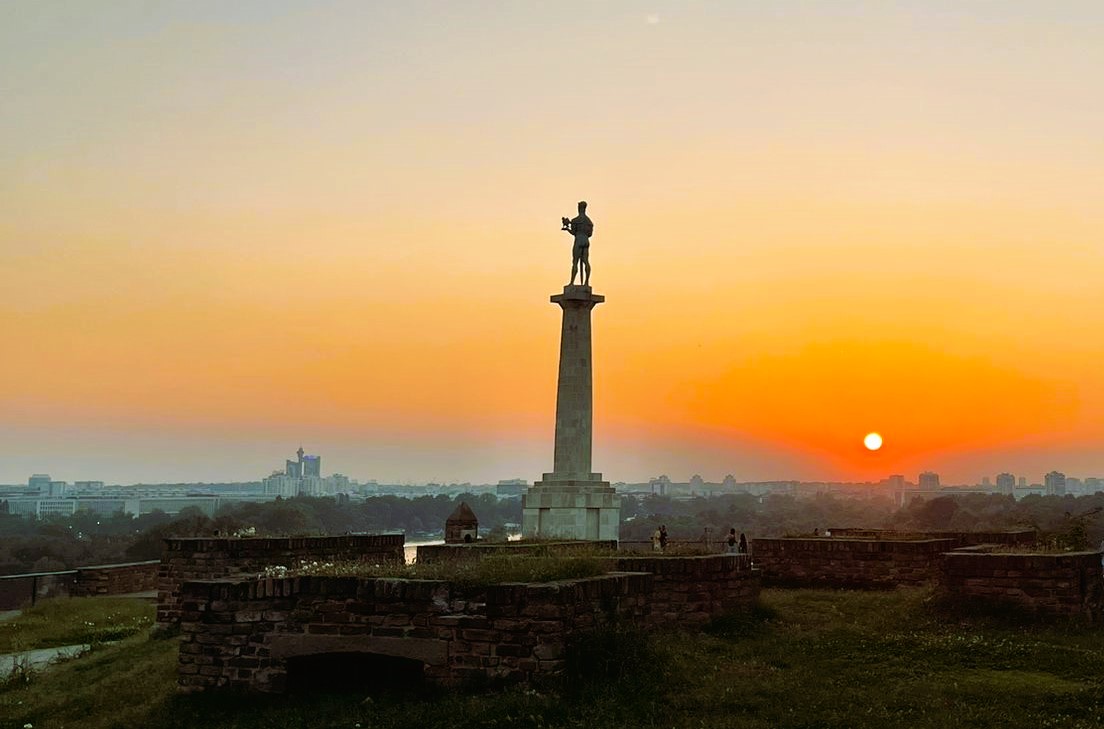
Knez Mihailova also acts as a connector to Belgrade’s other noteworthy and historic sites, one of the most important being the fortress of Kalemegdan. For centuries, Kalemegdan was Belgrade’s main military base; today, it is the capital’s most visited attraction in large part because of its architecture and views of the Sava and Danube rivers.
A ten minute walk off of Knez Mihailova is Skadarlija. Most famously known as the “bohemian quarter,” Skadarlija’s allure was developed at the end of the 19th century when influential writers, actors and musicians moved into its inns and gathered inside its bistros. Three of the restaurants from that time are still around today: Dva Jelena (Two Deer), Tri Sesira (Three Hats) and Zlatni Bokal (Golden Goblet). *At Dva Jelena, try the mushrooms served on iceberg lettuce and peppered olive oil for a starter, and the beef fillet stuffed with sliced smoked beef for the main.
There are countless of other sites to witness in Belgrade including the church of Sveti Sava; the monument of famous author Ivo Andric; the floating bars and restaurants of the city’s Splavovi; and the Crvena Zvezda soccer stadium. But even if you don’t get to experience these things, a walk down Knez Mihailova will still ignite your heart – it always does for me.
Hotel recommendations:
Le Petit Piaf, Skadarilja
Hotel Royal Inn, Kralja Petra

 BOULEVARD